Rebar Development Length Explained: A Practical Guide for Junior Structural Engineers
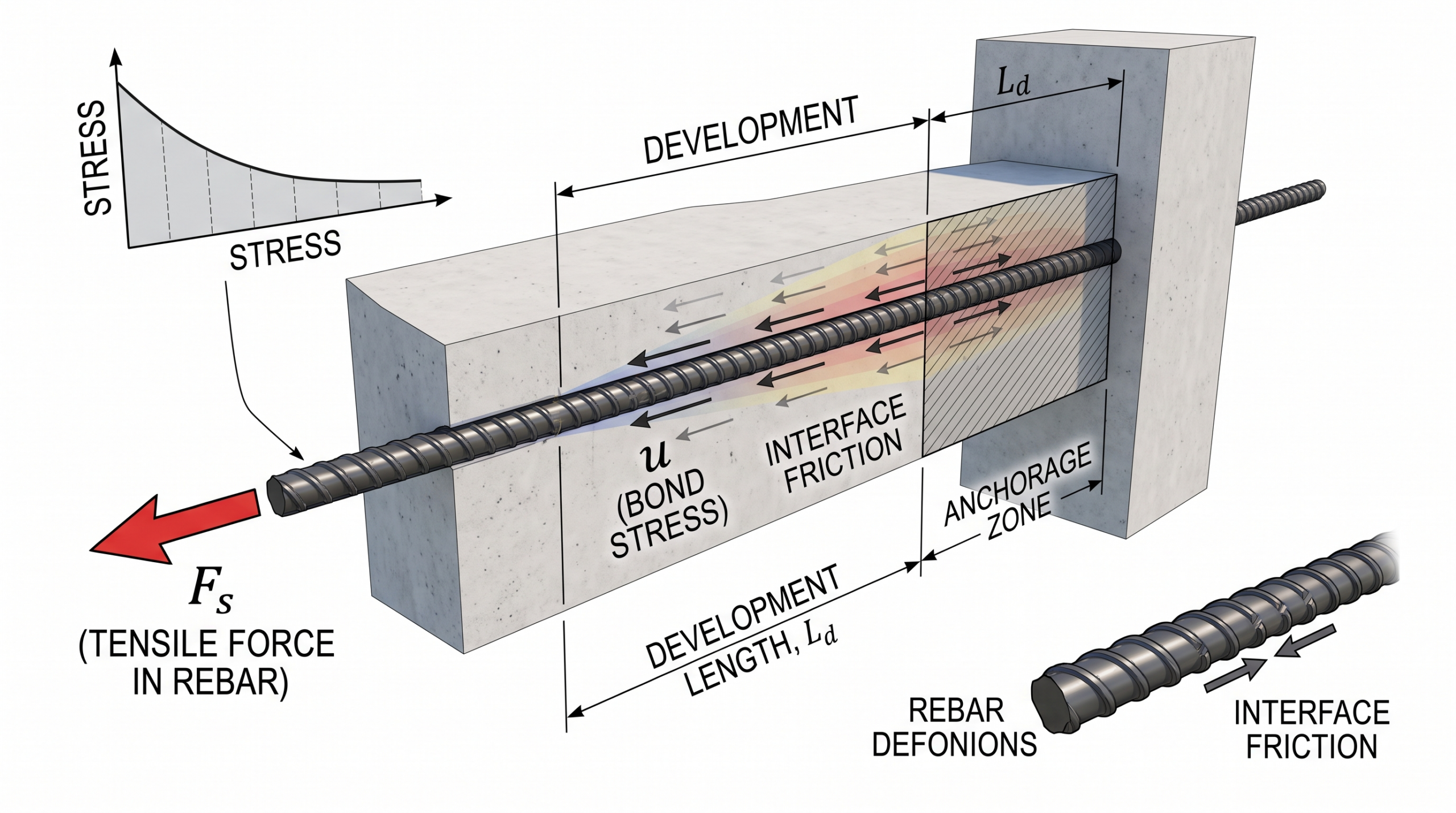
rebar-development-length-reinforced-concrete.webp

Rebar development length is one of the most important concepts in reinforced concrete design. However, it is also easy to overlook when you first start designing beams, slabs, columns, and foundations. A reinforcing bar does not transfer its full force into concrete immediately. Instead, it needs enough embedded length to develop that force through bond … Read more
Eurocode Load Combinations Explained: ULS, SLS, γG and γQ

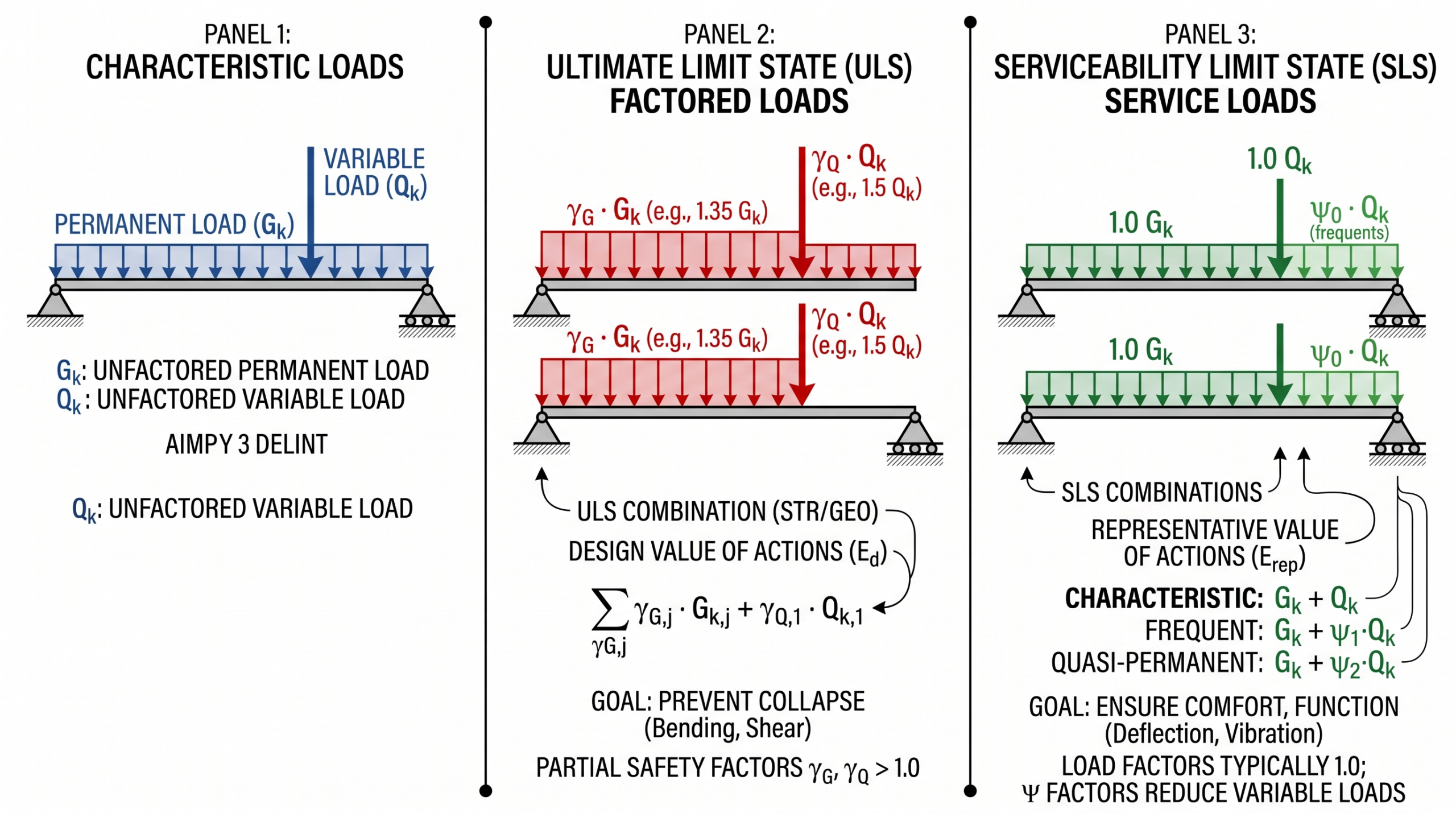
Introduction A structural model may contain dead load, live load, wind load, snow load, and many other actions. However, engineers normally do not design a beam or column using these characteristic loads separately. Therefore, these actions must be combined according to the relevant design situation. This is where Eurocode load combinations become important. At first, … Read more

Gravity Load Path in Buildings: A Step-by-Step Guide for Junior Structural Engineers

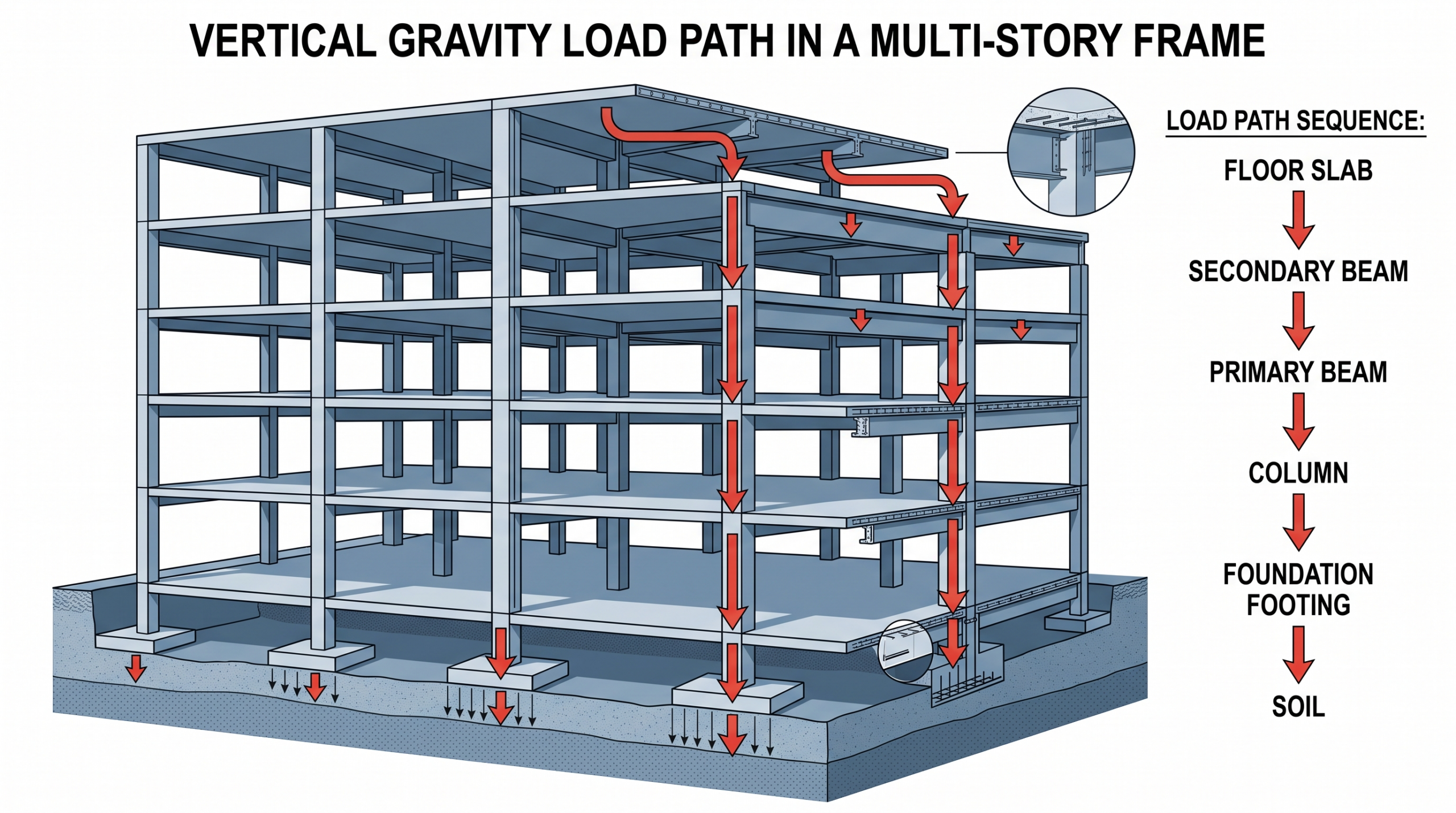
Introduction Every load applied to a building needs a continuous path to the ground. A floor load may begin at a slab, move into beams, continue through columns, and finally reach the foundation and supporting soil. This sequence is called the gravity load path. Understanding the gravity load path is one of the most important … Read more

STAAD.Pro Hands-On: Generate ASCE 7-22 Wind Loads, Run Analysis, and Check Results

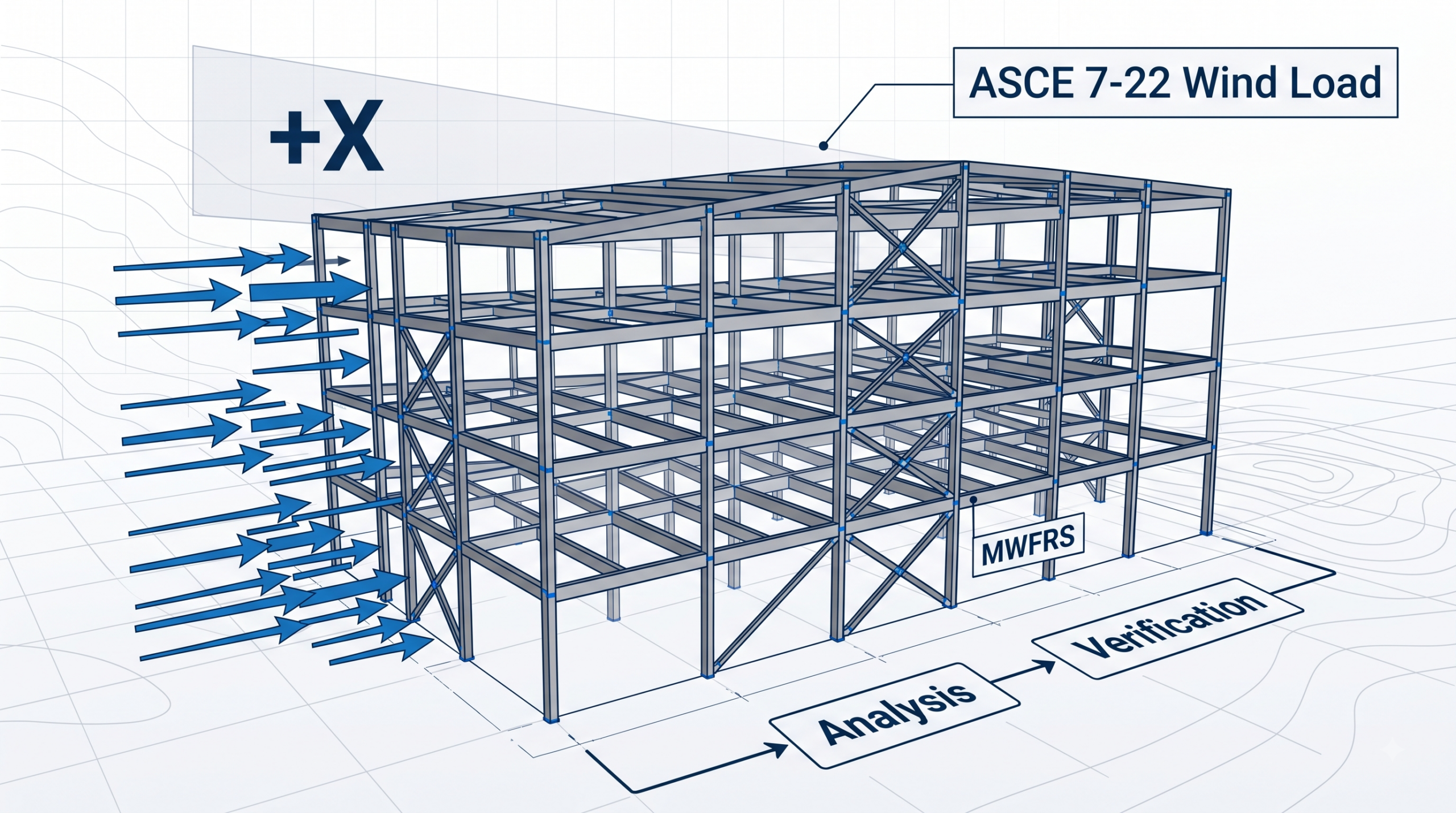
STAAD Pro ASCE 7-22 wind load beginner tutorial

Introduction A STAAD Pro ASCE 7-22 wind load workflow becomes much easier once you separate three tasks: defining the wind parameters, generating the structural loads, and checking whether STAAD.Pro applied those loads correctly. This beginner tutorial follows the logic of Bentley’s official STAAD.Pro 2026 ASCE 7-22 verification example. We will use a small enclosed, flat-roof … Read more

ASCE 7-22 Wind Loads Explained: A Practical Guide for Junior Structural Engineers

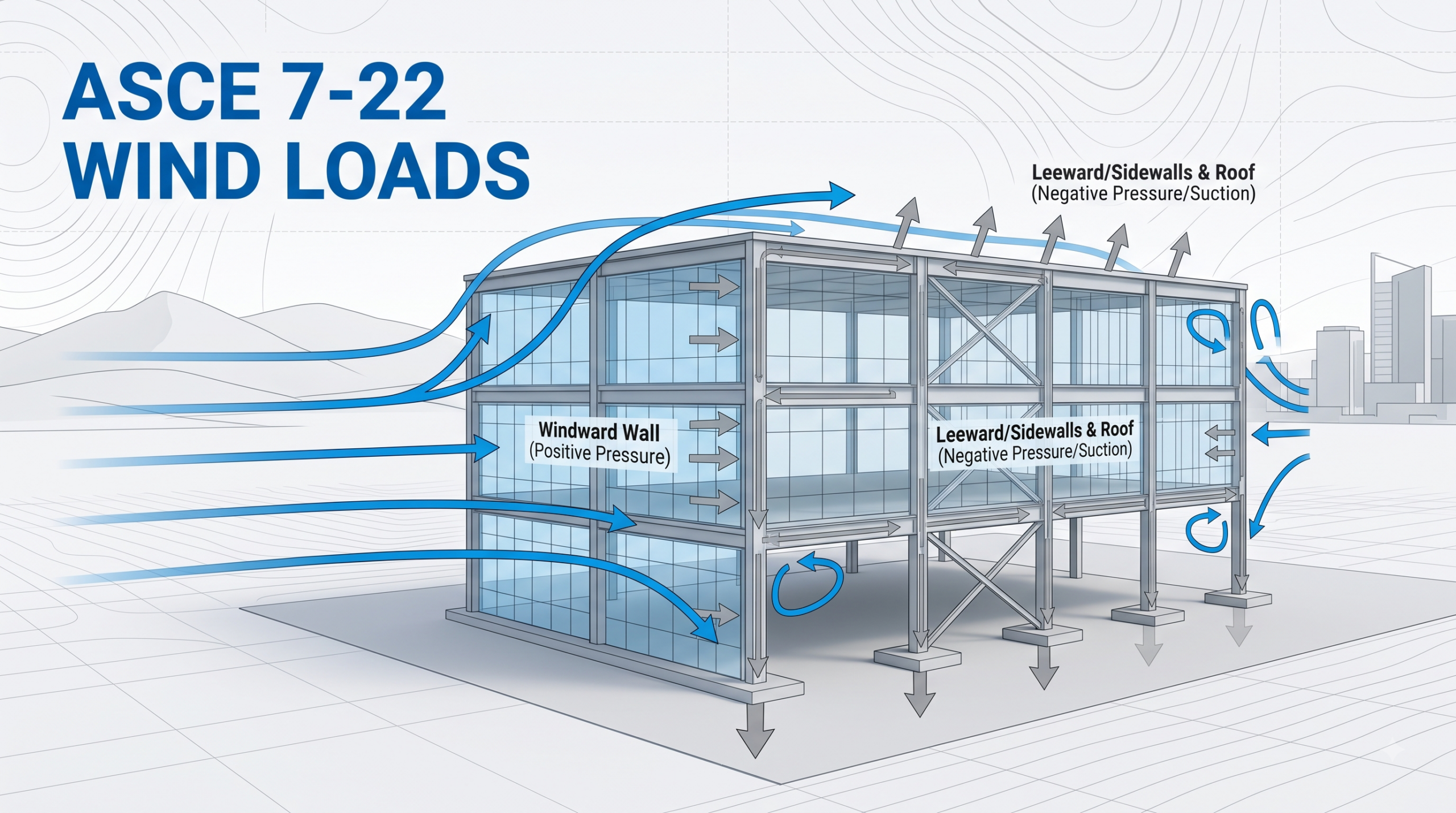
ASCE 7-22 wind load practical guide

Introduction An ASCE 7-22 wind load calculation can look intimidating when you first open the standard. Basic wind speed, risk category, exposure, velocity pressure, pressure coefficients, internal pressure, MWFRS, and Components & Cladding all appear in the same workflow. However, the process becomes much easier when you understand what each parameter does and calculate the … Read more

Partial Safety Factors in Structural Design: LRFD vs Eurocode Explained

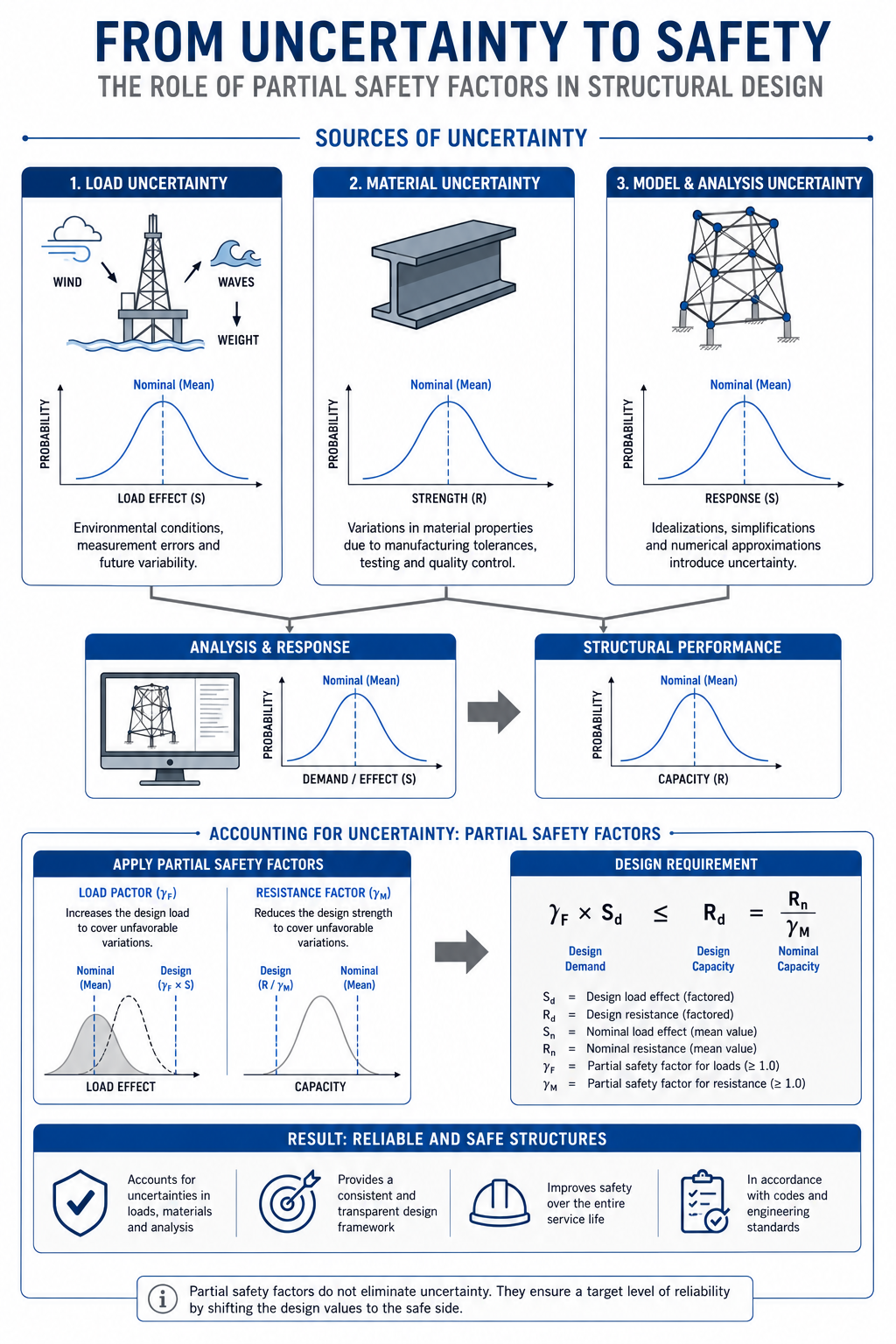
Partial safety factors structural design workflow

A beginner-friendly comparison of LRFD-style (AISC/ACI) and Eurocode approaches to partial safety factors. Practical workflow, common pitfalls, and a conceptual worked example to help junior engineers apply factors correctly.

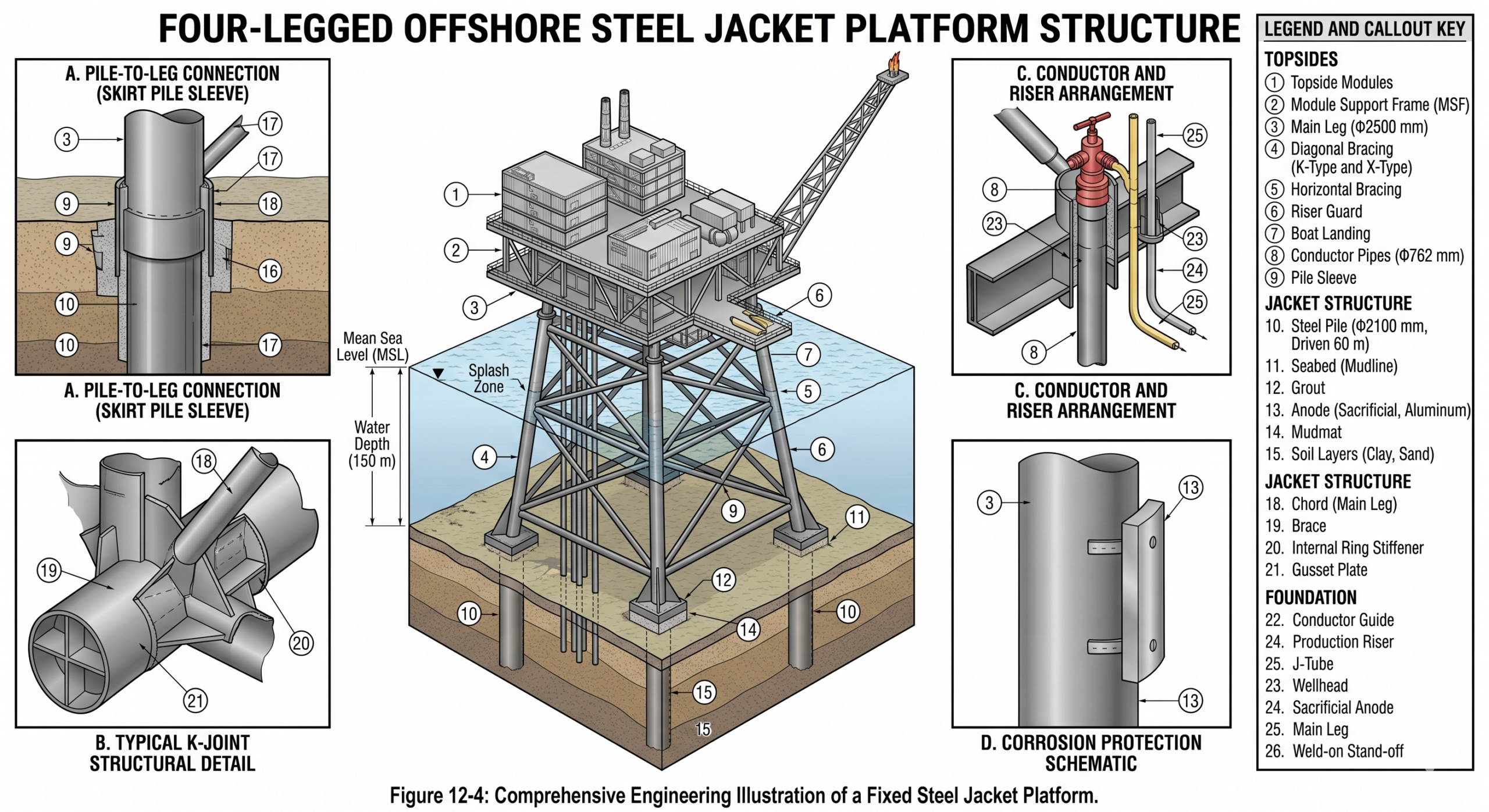
SACS Hands‑On: Model, Run and Check a Simple Offshore Jacket Frame (Beginner Workflow)

A step-by-step beginner workflow for modeling a basic offshore jacket in SACS: geometry, materials, supports, loads, modal and static runs, checks and common fixes.

Step-by-step design of a cantilever reinforced concrete retaining wall — hand calculation example and checks

A practical, beginner-friendly walkthrough showing hand calculations for a low-to-medium height cantilever RC retaining wall: earth pressures, stability checks, bending/shear design, reinforcement guidance, and drainage/detailing notes.